Buy cloud-support.eu ?
We are moving the project
cloud-support.eu .
Are you interested in purchasing the domain
cloud-support.eu ?
domain@kv-gmbh.de · 0541-91531010
Buy cloud-support.eu ?
Why are demonstrative pronouns called demonstrative pronouns?
Demonstrative pronouns are called demonstrative because they demonstrate or point to a specific noun or pronoun in a sentence. They help to indicate the position or location of the noun or pronoun in relation to the speaker or listener. By using demonstrative pronouns such as "this," "that," "these," and "those," speakers can make their communication more precise and clear by specifying which person, place, thing, or idea they are referring to. **
What is the difference between demonstrative pronouns and demonstrative determiners in French?
In French, demonstrative pronouns (ce, cette, ces) stand alone to replace a noun, while demonstrative determiners (ce/cet, cette, ces) are used with a noun to indicate which specific thing or person is being referred to. For example, "Ce livre est intéressant" uses the demonstrative determiner "ce" with the noun "livre," while "Celui-ci est intéressant" uses the demonstrative pronoun "celui-ci" to replace the noun "livre." Demonstrative determiners are used before a noun, while demonstrative pronouns are used in place of a noun. **


Similar search terms for Demonstrative
Top-Angebote
Products related to Demonstrative:
-
Happy Pet Pantry Joint Support Liquid For Dogs & Cats Arthritis Relief & Mobility Booster Joint Support Liquid For Dogs & Cats Arthritis Relief & Mobility BoosterHelp your furry companion move with greater comfort and confidence every day. Dog joint supplement liquid is specially formulated for dogs and cats experiencing stiffness, reduced mobility, or agerelated joint discomfort. Designed for pet parents...29,97 $*Shipping: 0,00 $Secure redirect to the provider
-
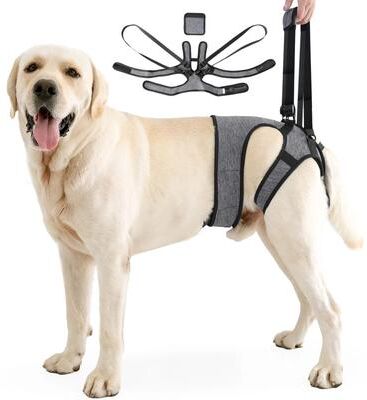
Uplifted Finds Aero Step Mobility Elite Rear Support System blue lProvide your companion with the dignity and freedom they deserve with the AeroStep Mobility Elite RearSupport System. Specifically engineered for dogs navigating the challenges of hip dysplasia, advanced arthritis, degenerative myelopathy, or...154,97 $*Shipping: 0,00 $Secure redirect to the provider
-
Uplifted Finds Aero Step Mobility Elite Rear Support System blue mProvide your companion with the dignity and freedom they deserve with the AeroStep Mobility Elite RearSupport System. Specifically engineered for dogs navigating the challenges of hip dysplasia, advanced arthritis, degenerative myelopathy, or...149,97 $*Shipping: 0,00 $Secure redirect to the provider
-
Uplifted Finds Aero Step Mobility Elite Rear Support System gray xlProvide your companion with the dignity and freedom they deserve with the AeroStep Mobility Elite RearSupport System. Specifically engineered for dogs navigating the challenges of hip dysplasia, advanced arthritis, degenerative myelopathy, or...159,97 $*Shipping: 0,00 $Secure redirect to the provider



-
What are demonstrative pronouns and relative pronouns?
Demonstrative pronouns are pronouns that are used to point to specific things or people. Examples of demonstrative pronouns include "this," "that," "these," and "those." Relative pronouns are pronouns that introduce dependent clauses and connect them to independent clauses. Examples of relative pronouns include "who," "whom," "whose," "which," and "that." **
-
Does French have the demonstrative determiner "cettes"?
No, French does not have the demonstrative determiner "cettes." The correct forms of the demonstrative determiner in French are "cette" for singular feminine nouns, "ce" for singular masculine nouns, and "ces" for plural nouns regardless of gender. "Cettes" is not a standard form in the French language. **
-
How do I use demonstrative pronouns correctly?
Demonstrative pronouns, such as "this," "that," "these," and "those," are used to point out specific people, places, or things. Use "this" and "these" to refer to something that is nearby or close in time, and use "that" and "those" to refer to something that is farther away or in the past. For example, you can say "This is my book" when referring to a book that is nearby, and "That was a great movie" when referring to a movie that you saw in the past. Make sure to match the demonstrative pronoun with the singular or plural noun it is replacing, and use the appropriate form (this/that or these/those) based on the distance or time. **
-
What is the demonstrative pronoun in French?
The demonstrative pronouns in French are "ce," "cette," "ces," and "cet" for singular and plural forms. These pronouns are used to point out or demonstrate specific people, places, or things. They agree in gender and number with the noun they refer to, and their usage depends on the proximity of the object being referred to. **

How does demonstrative silence manifest itself in lovers?
Demonstrative silence in lovers can manifest itself in various ways. It may occur during moments of deep emotional connection, where words are not needed to express their feelings for each other. It can also be a form of understanding and support, where one partner chooses to remain silent to give the other space to process their thoughts or emotions. In some cases, demonstrative silence can be a way for lovers to communicate without words, using nonverbal cues and gestures to convey their love and affection. **
Is it a demonstrative or personal pronoun in Latin?
In Latin, "hic" is a demonstrative pronoun. Demonstrative pronouns in Latin are used to point out specific things or people, while personal pronouns are used to refer to individuals or groups. "Hic" specifically means "this" or "these" and is used to indicate something close to the speaker. **
Top-Angebote
Products related to Demonstrative:
-
Ring Battery Video Doorbell Pro – Advanced Home Security & Connectivity, NewUpgrade your home security with the Ring Battery Video Doorbell Pro – Wireless Video Doorbell Security Camera . Designed to give you peace of mind, it delivers a head-to-toe 1536p HD view so you can see every detail clearly, from visitors to parcels at your doorstep. With advanced 3D Motion Detection and Bird’s Eye View , you’ll always know what’s happening around your home. The built-in colour night vision ensures crisp images even in the dark, while the wire-free battery design makes installation simple and flexible. Stay connected anywhere with instant notifications, two-way talk, and full integration with the Ring app, Alexa devices, and more. ✔️ Wireless video doorbell – Easy to install with a rechargeable battery, no wiring needed ✔️ 1536p HD head-to-toe view – See visitors and packages clearly in high definition ✔️ 3D Motion Detection & Bird’s Eye View – Advanced alerts and aerial perspective for extra security ✔️ Colour night vision – Crystal-clear video even in low light or darkness ✔️ Two-way talk with noise cancellation – Hear and speak to visitors in real time ✔️ Customisable motion zones – Focus on the areas that matter most ✔️ Smart alerts & notifications – Instant updates on your phone via the Ring app ✔️ Alexa compatible – Works seamlessly with Echo devices for hands-free monitoring ✔️ Quick-release battery pack – Easy to recharge and swap for uninterrupted security ✔️ Durable design – Built to withstand outdoor weather conditions The Ring Battery Video Doorbell Pro combines advanced motion detection, high-definition video, and smart home integration in one sleek device. Perfect for enhancing your home security, it ensures you never miss a visitor or delivery, day or night.174,49 £*Shipping: 0,00 £Secure redirect to the provider
-
Multisell Products Hub DIY Voice Control Light Switch Module For Smart Home Automation With Tuya, Alexa & Google Home Integration DIY Voice Control Light Switch Module For Smart Home Automation With Tuya, Alexa & Google Home IntegrationUpgrade your home with the DIY Light Switch Module, bringing cuttingedge smart home automation to your fingertips. Perfect for those who want seamless control over their lighting and appliances, this module easily integrates with Alexa and Google...34,97 $*Shipping: 0,00 $Secure redirect to the provider
-
Happy Pet Pantry Joint Support Liquid For Dogs & Cats Arthritis Relief & Mobility Booster Joint Support Liquid For Dogs & Cats Arthritis Relief & Mobility BoosterHelp your furry companion move with greater comfort and confidence every day. Dog joint supplement liquid is specially formulated for dogs and cats experiencing stiffness, reduced mobility, or agerelated joint discomfort. Designed for pet parents...29,97 $*Shipping: 0,00 $Secure redirect to the provider
-
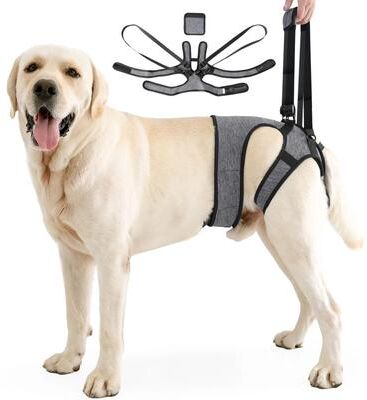
Uplifted Finds Aero Step Mobility Elite Rear Support System blue lProvide your companion with the dignity and freedom they deserve with the AeroStep Mobility Elite RearSupport System. Specifically engineered for dogs navigating the challenges of hip dysplasia, advanced arthritis, degenerative myelopathy, or...154,97 $*Shipping: 0,00 $Secure redirect to the provider
-
Why are demonstrative pronouns called demonstrative pronouns?
Demonstrative pronouns are called demonstrative because they demonstrate or point to a specific noun or pronoun in a sentence. They help to indicate the position or location of the noun or pronoun in relation to the speaker or listener. By using demonstrative pronouns such as "this," "that," "these," and "those," speakers can make their communication more precise and clear by specifying which person, place, thing, or idea they are referring to. **
-
What is the difference between demonstrative pronouns and demonstrative determiners in French?
In French, demonstrative pronouns (ce, cette, ces) stand alone to replace a noun, while demonstrative determiners (ce/cet, cette, ces) are used with a noun to indicate which specific thing or person is being referred to. For example, "Ce livre est intéressant" uses the demonstrative determiner "ce" with the noun "livre," while "Celui-ci est intéressant" uses the demonstrative pronoun "celui-ci" to replace the noun "livre." Demonstrative determiners are used before a noun, while demonstrative pronouns are used in place of a noun. **
-
What are demonstrative pronouns and relative pronouns?
Demonstrative pronouns are pronouns that are used to point to specific things or people. Examples of demonstrative pronouns include "this," "that," "these," and "those." Relative pronouns are pronouns that introduce dependent clauses and connect them to independent clauses. Examples of relative pronouns include "who," "whom," "whose," "which," and "that." **
-
Does French have the demonstrative determiner "cettes"?
No, French does not have the demonstrative determiner "cettes." The correct forms of the demonstrative determiner in French are "cette" for singular feminine nouns, "ce" for singular masculine nouns, and "ces" for plural nouns regardless of gender. "Cettes" is not a standard form in the French language. **
Similar search terms for Demonstrative
-
Uplifted Finds Aero Step Mobility Elite Rear Support System blue mProvide your companion with the dignity and freedom they deserve with the AeroStep Mobility Elite RearSupport System. Specifically engineered for dogs navigating the challenges of hip dysplasia, advanced arthritis, degenerative myelopathy, or...149,97 $*Shipping: 0,00 $Secure redirect to the provider
-
Uplifted Finds Aero Step Mobility Elite Rear Support System gray xlProvide your companion with the dignity and freedom they deserve with the AeroStep Mobility Elite RearSupport System. Specifically engineered for dogs navigating the challenges of hip dysplasia, advanced arthritis, degenerative myelopathy, or...159,97 $*Shipping: 0,00 $Secure redirect to the provider
-
Uplifted Finds Aero Step Mobility Elite Rear Support System blue sProvide your companion with the dignity and freedom they deserve with the AeroStep Mobility Elite RearSupport System. Specifically engineered for dogs navigating the challenges of hip dysplasia, advanced arthritis, degenerative myelopathy, or...144,97 $*Shipping: 0,00 $Secure redirect to the provider
-
Uplifted Finds Aero Step Mobility Elite Rear Support System gray sProvide your companion with the dignity and freedom they deserve with the AeroStep Mobility Elite RearSupport System. Specifically engineered for dogs navigating the challenges of hip dysplasia, advanced arthritis, degenerative myelopathy, or...144,97 $*Shipping: 0,00 $Secure redirect to the provider
-
How do I use demonstrative pronouns correctly?
Demonstrative pronouns, such as "this," "that," "these," and "those," are used to point out specific people, places, or things. Use "this" and "these" to refer to something that is nearby or close in time, and use "that" and "those" to refer to something that is farther away or in the past. For example, you can say "This is my book" when referring to a book that is nearby, and "That was a great movie" when referring to a movie that you saw in the past. Make sure to match the demonstrative pronoun with the singular or plural noun it is replacing, and use the appropriate form (this/that or these/those) based on the distance or time. **
-
What is the demonstrative pronoun in French?
The demonstrative pronouns in French are "ce," "cette," "ces," and "cet" for singular and plural forms. These pronouns are used to point out or demonstrate specific people, places, or things. They agree in gender and number with the noun they refer to, and their usage depends on the proximity of the object being referred to. **
-
How does demonstrative silence manifest itself in lovers?
Demonstrative silence in lovers can manifest itself in various ways. It may occur during moments of deep emotional connection, where words are not needed to express their feelings for each other. It can also be a form of understanding and support, where one partner chooses to remain silent to give the other space to process their thoughts or emotions. In some cases, demonstrative silence can be a way for lovers to communicate without words, using nonverbal cues and gestures to convey their love and affection. **
-
Is it a demonstrative or personal pronoun in Latin?
In Latin, "hic" is a demonstrative pronoun. Demonstrative pronouns in Latin are used to point out specific things or people, while personal pronouns are used to refer to individuals or groups. "Hic" specifically means "this" or "these" and is used to indicate something close to the speaker. **
* All prices are inclusive of VAT and, if applicable, plus shipping costs. The offer information is based on the details provided by the respective shop and is updated through automated processes. Real-time updates do not occur, so deviations can occur in individual cases. ** Note: Parts of this content were created by AI.